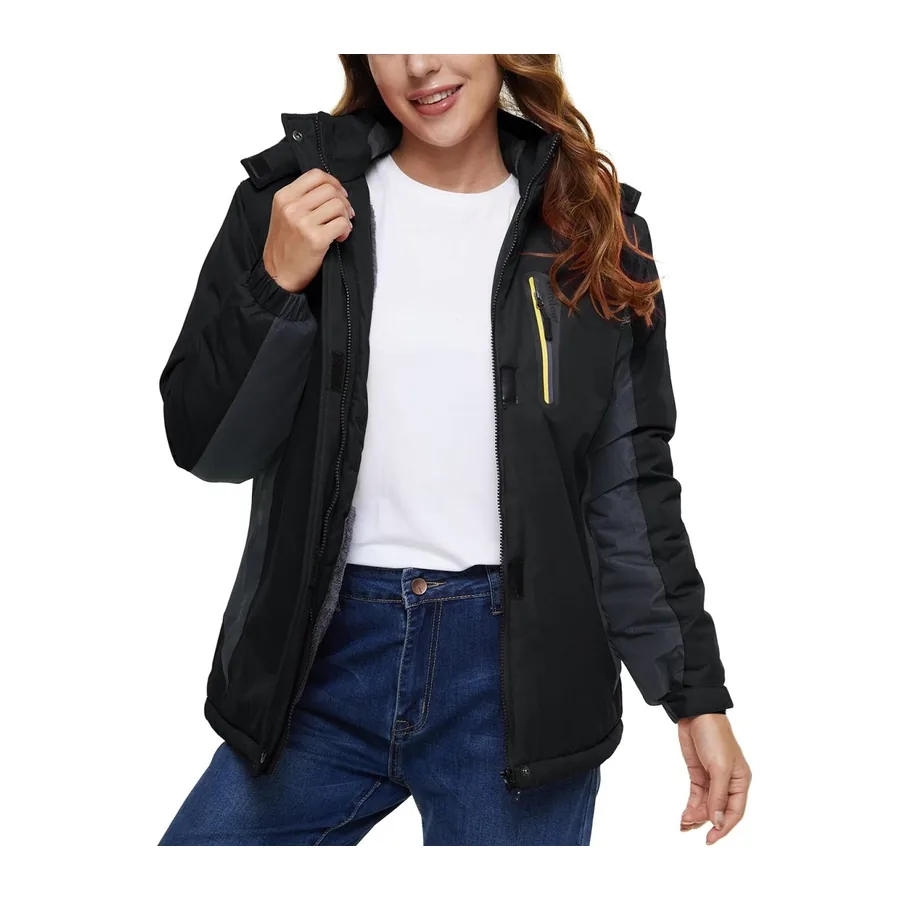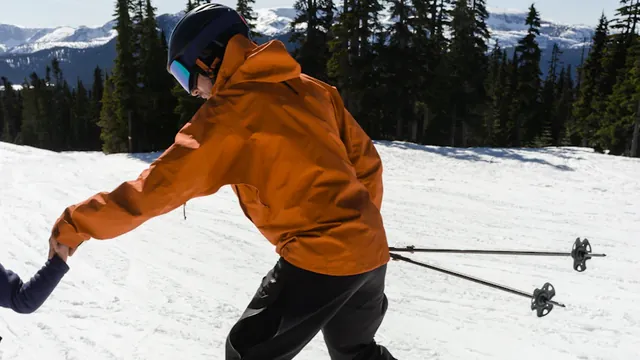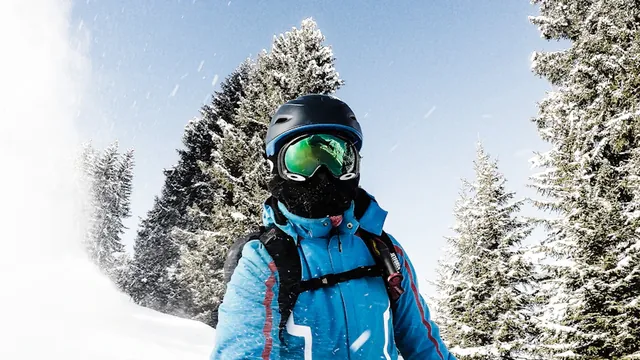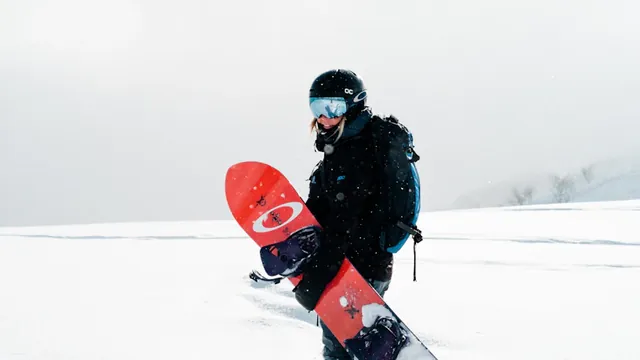
The best ski jackets for snowboarders keep wet snow out, vent before you overheat, and still cover your lower back when you crouch to strap in. Below are the jackets that keep coming up at the top of independent 2026 tests, what their specs mean, and the complaints reviewers and riders report, so you can match a jacket to your climate and your layers.
The specs that actually matter
- Waterproof rating. Listed in millimeters (10K = 10,000 mm). 10K handles dry, cold snow. 20K and up is the safer pick for wet regions. Gore-Tex jackets are commonly listed at 28,000 mm.
- Breathability. Listed in grams (g/m²/24h). 10K–15K is fine for lift laps. 20K and up helps if you hike or ride hard.
- 2-layer vs 3-layer. 2L shells use a hanging liner and feel softer. 3L shells bond the membrane to the face fabric and are lighter, tougher, and usually stiffer.
- Insulation. Synthetic fill in grams. Many resort jackets use 60–80 g in the body and 40 g in the sleeves.
- Snowboard details. Powder skirt, pit zips you can open with gloves on, a helmet-compatible hood, wrist gaiters, and a sleeve pass pocket.
| Type | Good for | Trade-off | Examples |
|---|---|---|---|
| Uninsulated shell | Riders who layer, mixed weather, spring | Needs a midlayer on cold days | Arc’teryx Sabre, Arc’teryx Sentinel (women’s) |
| Insulated | Cold resort laps, simple setup | Too warm on mild afternoons | Burton [ak] Swash, Helly Hansen Alpha LifaLoft, Patagonia Insulated Powder Town |
| 3-in-1 | One purchase for town and hill | Bulky, weaker venting | 686 Smarty 3-in-1 Form, The North Face ThermoBall Eco Snow Triclimate |
Best ski and snowboard jackets for 2026-27
Burton [ak] Swash: best all-around for resort snowboarding
The Swash is The Inertia’s top snowboard jacket and a Treeline Review pick. It pairs a 2-layer Gore-Tex shell (75D face fabric) with 60 g PrimaLoft Silver insulation mapped to the core. You get a powder skirt, pit zips, four zipped torso pockets, an arm pass pocket, an insulated phone pocket, wrist gaiters, and a hood that fits over a helmet.
- Who it’s for: Resort riders who want one jacket for most of the winter.
- Complaints: Reviewers note it’s expensive for a 2-layer jacket, not 3-layer.
Helly Hansen Alpha LifaLoft: warmest pick for cold resorts
OutdoorGearLab’s top-rated men’s ski jacket uses Helly Tech Professional, Helly Hansen’s own membrane rather than Gore-Tex, with LifaLoft insulation. Features include a powder skirt, mesh-backed pit zips, a back vent, a removable hood, RECCO, and seven pockets.
- Who it’s for: Riders who run cold or ride in places like Michigan, Minnesota, or Vermont in January.
- Complaints: Reviewers call the fit snug and short in length, which matters for snowboarders who crouch. They also found it too warm for mild days. Try it on over your midlayer and check the back hem in a squat.
Arc’teryx Sabre: best shell for resort riders who layer
OutdoorGearLab’s best resort shell uses 3-layer Gore-Tex with a thin flannel backer and no insulation. It has pit zips, a powder skirt, RECCO, and two internal dump pockets. The Sabre SV version adds Gore-Tex Pro and a longer cut.
- Who it’s for: Riders in wet climates who want maximum weather protection and control warmth with a base layer and midlayer.
- Complaints: Stiff fabric, a powder skirt you can’t remove, and all warmth has to come from your layers.
Patagonia Insulated Powder Town (women’s): best insulated women’s jacket
OutdoorGearLab’s top insulated women’s jacket uses a 2-layer H2No shell with 80 g of recycled Thermogreen insulation in the body and 40 g in the sleeves. It has a snap-away powder skirt, pit zips, RECCO, a forearm pocket, and a long drop hem that’s useful for snowboarding.
- Complaints: Runs large and boxy, can feel bulky, and is too warm for spring. Reviewers also saw the waterproofing degrade over time. Re-treating the DWR (water-repellent finish) helps.
For women who prefer a shell, the Arc’teryx Sentinel (3-layer Gore-Tex ePE, long pit zips, integrated powder skirt) is OutdoorGearLab’s top uninsulated pick. Its athletic cut leaves room for a puffy underneath.
686 Smarty 3-in-1 Form: best 3-in-1 for snowboarders
The Smarty combines an infiDRY 20K 2-layer shell with a removable liner that has 160 g of infiLOFT insulation. You can wear the shell on warm days, the liner around town, or both zipped together in the cold. It’s OutdoorGearLab’s top 3-in-1, and The Inertia praises its warmth.
- Complaints: Heavy and bulky with both pieces in, and the pit zips don’t vent through the liner. The liner itself isn’t very breathable.
The North Face ThermoBall Eco Snow Triclimate is The Inertia’s best 3-in-1. Its DryVent 2L shell and ThermoBall Eco liner get praise for fit and features, with so-so breathability. For women on a tighter budget, OutdoorGearLab’s best-value pick is the Columbia Whirlibird V Interchange (Omni-Tech shell, Omni-Heat lined inner jacket), though reviewers flagged inconsistent sizing.
Burton Covert 2.0: budget snowboard jacket with the most pockets
The Covert 2.0 is GearJunkie’s budget men’s pick, with 80 g ThermacoreECO insulation, 10 pockets, fleece-lined hand pockets, and sizes from XXS to XXXL.
- Complaints: Its 10K/5K shell is the weak point. GearJunkie notes reduced waterproofing for wet climates, so it’s better suited to dry snow in Colorado or Utah than to Pacific Northwest storms.
Entry-level jackets: what to expect
Value brands such as Free Soldier and Wantdo, both in our catalog, cover first trips and occasional riding. OutdoorGearLab tested both. They describe the Free Soldier as warm but boxy, with no pit zips and poor ventilation. They found the Wantdo women’s jacket runs very large, breathes poorly, and has no pit zips. Expect fleece-lined warmth for cold, dry days rather than storm protection. Size down if you’re between sizes, and open the front zip on warm runs instead of relying on vents.
Fit: try it in a snowboard stance
Start with the brand’s US size chart (chest, then sleeve length), then try the jacket over the midlayer you actually wear.
- Squat and reach for your bindings. The back hem should stay over your snow pants or bibs. Shorter ski cuts like the Alpha LifaLoft may ride up.
- Cross your arms and reach forward. Shoulders shouldn’t pull the cuffs back past your gloves.
- Put the hood on over your helmet. You should be able to turn your head and check over your shoulder.
- Open the pit zips with gloves on. If you can’t find the pulls, you won’t use them.
Reviewers report that sizing varies by brand. Patagonia Powder Town and Wantdo run large, Helly Hansen Alpha runs snug, and Arc’teryx is athletic. Compare men’s ski jackets and women’s ski jackets by the actual chest and sleeve measurements, not just the letter size.
Layering under any jacket
A practical system is a ski base layer next to your skin, a fleece or light puffy as needed, and the jacket on top. With a shell, that system covers everything from spring slush to January cold. With an insulated jacket, a base layer alone is often enough, and the pit zips do the rest. Close the vents before the chairlift and open them before a long run.
Browse the full jacket category and shortlist two or three models with the same specs. Then decide on fit, the length of the back hem, and whether you can work the zips with your own gloves.