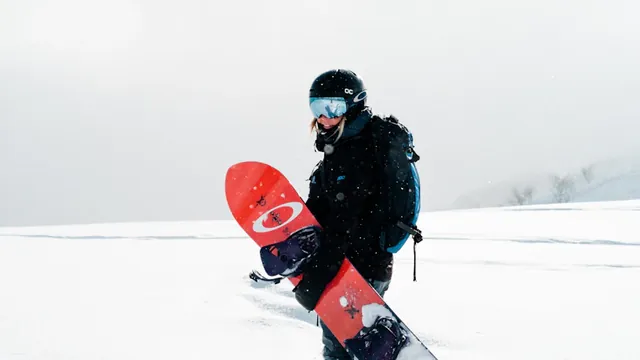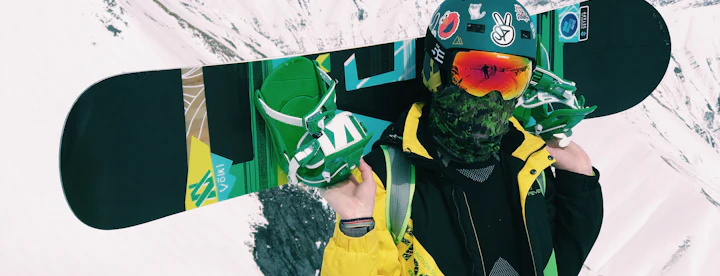
Riders who search for step in snowboard bindings usually want to stop sitting in the snow to buckle up. Six systems now compete for that job, and they work in very different ways. Some lock the boot directly to the binding. Others keep the straps and only speed up how you get in. The biggest question is whether you have to buy new boots.
What are step in snowboard bindings?
“Step-in” is a shopping term, not one mechanism. Here is what is actually on the market for 2026-27:
| System | How it holds the boot | Boots | Examples |
|---|---|---|---|
| Traditional two-strap | Ankle and toe straps with ratchets | Any soft boot | Union Flite Pro, Burton Citizen |
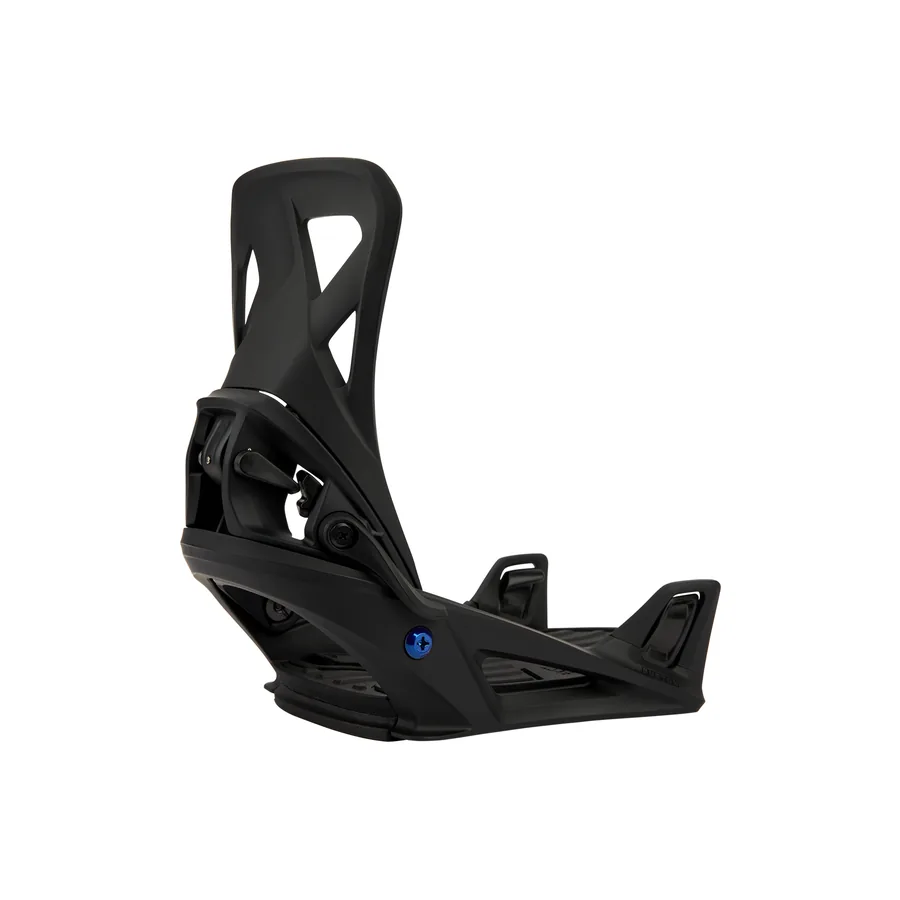
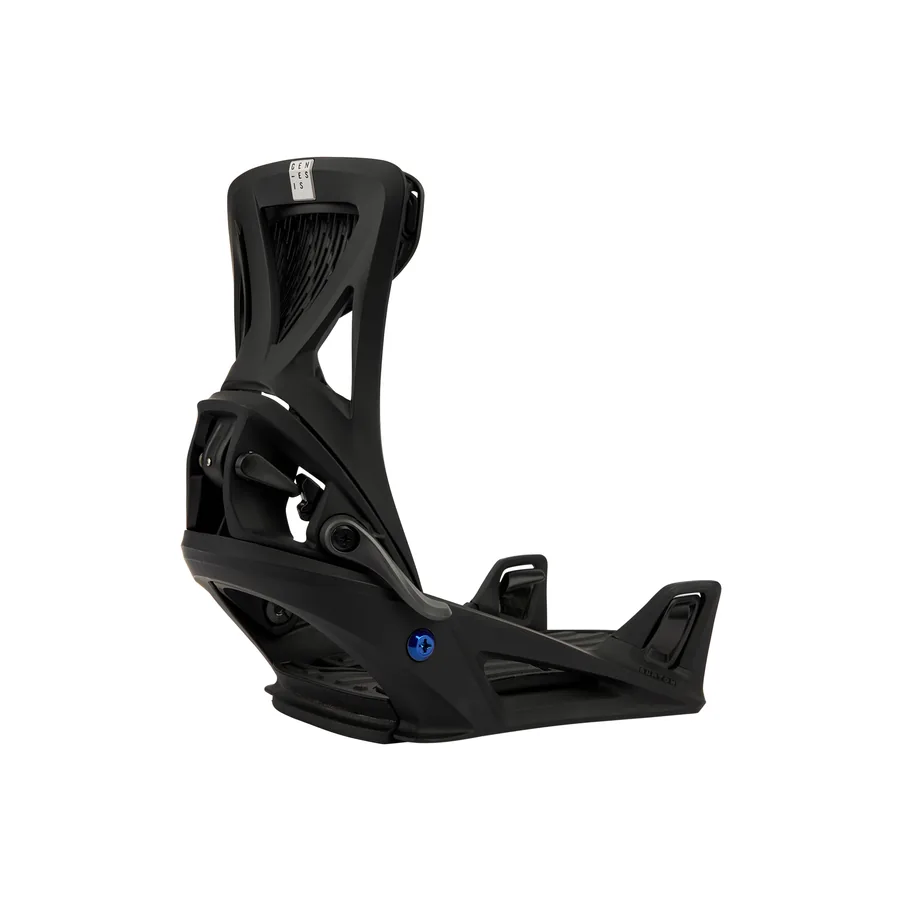
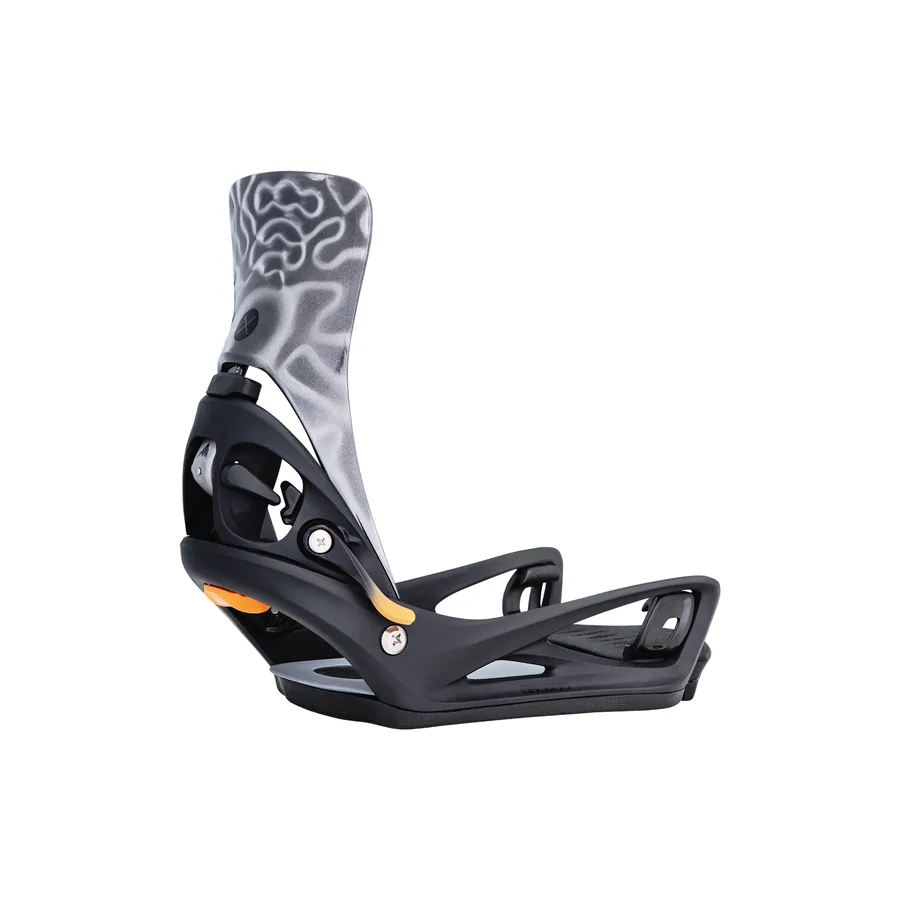
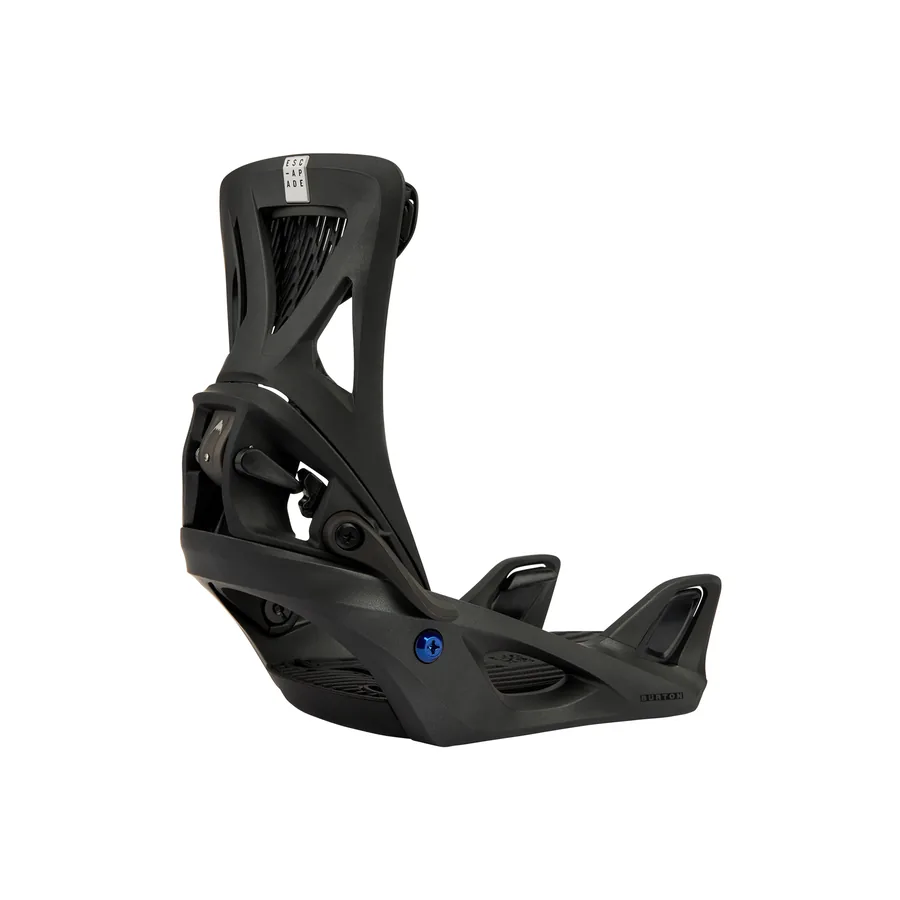
| Burton Step On (and licensed) | 2 toe hooks + 1 heel cleat, no straps | Step On boots only | Burton Step On Re:Flex, Genesis, X; Union Atlas / Atlas Pro Step On |
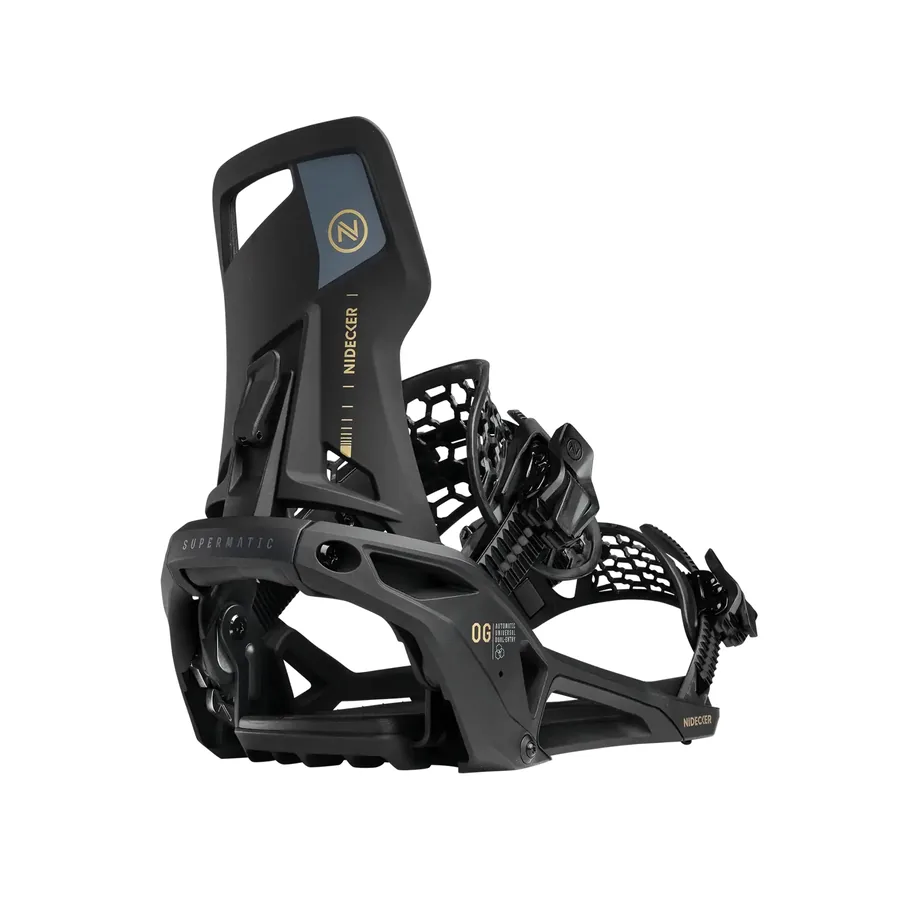
| Nidecker Supermatic | Heel pedal locks the highback; straps stay preset | Any soft boot | Supermatic, Supermatic Carbon, LT Supermatic |
| FASE | Pressure tab at the heel closes the highback; ankle strap stays connected | Any soft boot | Jones Mercury / Nebula / Zenith FASE, Rome Katana FASE, Bataleon Blaster FASE, ThirtyTwo T32M FASE |
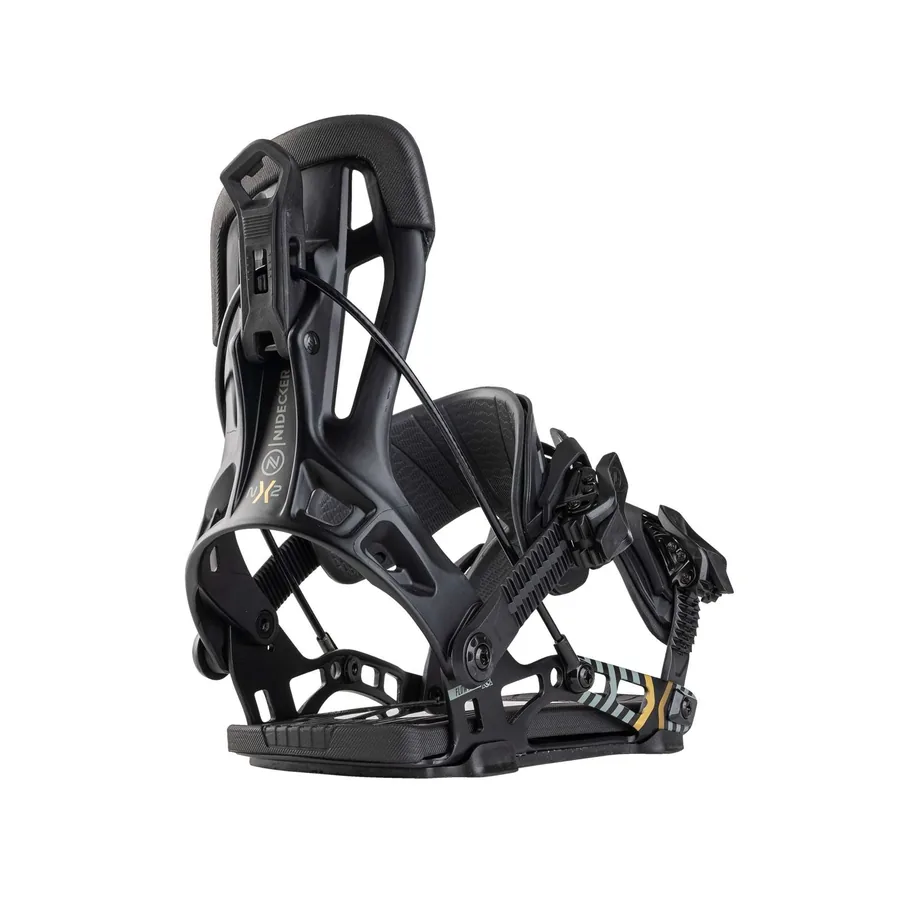
| Flow rear-entry | Highback reclines and the boot slides in behind preset straps | Any soft boot | Flow NX2 Hybrid / Fusion |
| Clew | Highback and ankle unit stays on your boot and clips onto a base on the board | Any soft boot | Clew Freedom 1.0, Independence 1.0 |
How Burton Step On works and what changed for 2026-27
Burton launched Step On in 2017. The boot connects at three points: two in the forefoot and one metal heel cleat. You put your toe in first and press your heel down until it clicks. To get out, you pull a lever on the side of the heelcup. Nothing needs adjusting between runs, which is why reviewers call it the fastest system on the list.
The catch is that only Step On boots fit Step On bindings. Burton, DC (for example the Judge Step On), and Nitro (the Profile and Venture Step On) make compatible boots. Union makes Step On bindings: the Atlas, the stiffer Atlas Pro, and the women’s Astra. Union says they accept any Step On boot. For 2026-27, Burton:
- Added the Heel Grabber heel connection, plus a redesigned baseplate and heelcup, to the Step On X Re:Flex. The women’s X Re:Flex gets the same and is now Burton’s most aggressive women’s Step On binding.
- Added a mid-priced Step On Cartel X Re:Flex for men and a Lexa X Re:Flex for women.
- Added Performance Towers at the heel of the EST versions of the Genesis, Cartel X, Escapade, and Lexa X.
- Added Highshot Plus and Waverange Plus Step On boots with dual-zone BOA as a middle tier, and retired the Photon Step On boot.
Burton’s newer Toe Hook 2.0 still works with Step On boots from earlier seasons.
Independent reviewers report a few recurring complaints. The Good Ride found stepping out “sticky” on all Step On bindings, including the Union Atlas Pro Step On. The same review lists weaker toeside response than heelside, less damping than the standard Atlas Step On, no canting, and limited heelside overhang on wide boards. That last point matters for hard carvers. Boot durability is another theme. The Good Ride’s tester said the Highshot X Pro Step On shell was showing wear after two days, and GearJunkie also noted signs of wear on the same boot. Browse Step On snowboard bindings and Step On boots together, and buy them as a pair in sizes the maker says match.
Quick-entry bindings that keep your boots
Nidecker Supermatic. You slide your boot in past the reclined highback and press down on the heel pedal. The highback flips up and locks. To get out, you press a lever on the inside of the binding and lift your foot. Whitelines confirms it works with any boot and that you can still strap in the conventional way when you need to. The trade-off is weight. The Good Ride measured about 2.8 lb per binding, and Blister and Whitelines both call it heavier than a regular two-strap. GearJunkie found the LT Supermatic’s baseplate insert gave harsh landings. Nidecker’s Rift Pro and Kita boots have outsoles shaped for the Supermatic.
FASE (Jones, Rome, Bataleon, ThirtyTwo). The highback is angled outward (Jones calls it AutoBack). When your heel presses a tab in the heelcup, the highback closes. To exit, you bend your knee and lift your heel. The ankle strap stays connected on an extended ladder, so you only ratchet it down. Jones says the mechanism adds about 40 g, works with all boots on the market, and carries a lifetime warranty. The 2027 Jones range is the Nebula (resort), Mercury (all-terrain), and Zenith (expert). In The Good Ride’s Mercury FASE review, the tester was slower than with straps at first, then quick once he had the motion down. He liked not having to reach down to the side as you do with Step On and Supermatic. He also reported powder building up at the heel and less damping than the standard Mercury.
Flow rear-entry. The highback folds back, the boot slides in under preset straps, and you flip a lever up to lock it. The NX2 Hybrid and Fusion lines use a toe cap and ankle strap connected into one “Hybrid PowerStrap.” On the Fusion, ActiveStrap lets the straps open wider when the highback reclines, so you can also strap in from the front. The Good Ride’s Jones reviewer dislikes reaching behind the binding to close a Flow. If you often strap in facing uphill on steep pitches, practice that before you buy. Compare models in rear-entry snowboard bindings.
Clew. The highback, heel, and ankle strap stay on your boot, and you clip them onto a base mounted to the board. The Good Ride found it very easy to get in and out of and useful for switching between several boards, since you only buy extra bases. The same review found walking and skating awkward with the unit attached, no real shock absorption, and an all-plastic base that is hard on topsheets. An Angry Snowboarder video, as summarized by The Manual, also criticized the screws and clips. It is the most divisive option here.
Where traditional straps still make sense
Two-strap bindings still offer the widest choice of boots, flex, and adjustability, including canting, heel-loop position, and forward lean. They also have no mechanism for ice to jam. If your current bindings feel slow because a ratchet is worn or the straps are badly centered, a replacement ladder or a better strap setup costs far less than switching systems. Riders who adjust ankle strap tension during the day, or who want one boot that works with any rental or demo binding, will probably stay happier with straps.
Pick for your terrain and riding habits
- Lots of resort laps, and fine buying new boots: Burton Step On or Union Step On. It’s the fastest and needs the least fiddling.
- You like your current boots: Nidecker Supermatic or a FASE binding. FASE rides most like a strap binding. The Supermatic is the most automatic.
- Hard carvers on wide boards: check heel overhang and disc options before choosing any Step On binding.
- Several boards: Clew, or a set of Step On bindings on each board.
- Beginners: Step On gets in the way least, but rent it first if you can. Our beginner snowboard gear guide covers what to buy first.
Malcolm Moore’s video “Supermatics vs FASE” (embedded above) compares the two most popular boot-agnostic systems back to back.
Run a compatibility and entry checklist
- Fit the boot first. Fast entry won’t make up for heel lift.
- Match the binding size to the boot size using the maker’s chart. For Step On, use Burton’s or Union’s boot-and-binding pairings.
- Check the disc against your board’s insert pattern (4x4, 2x4, or Channel) and the stance width and angles you want.
- Set the gas pedal or heelcup to your boot length, then preset the straps on Supermatic, FASE, Flow, or Clew.
- At home, practice getting in and out a dozen times with gloves on. Then try it on a slope, clearing snow from the cleats or heel pedal first.
When that feels automatic, compare the full snowboard bindings selection by system and terrain.