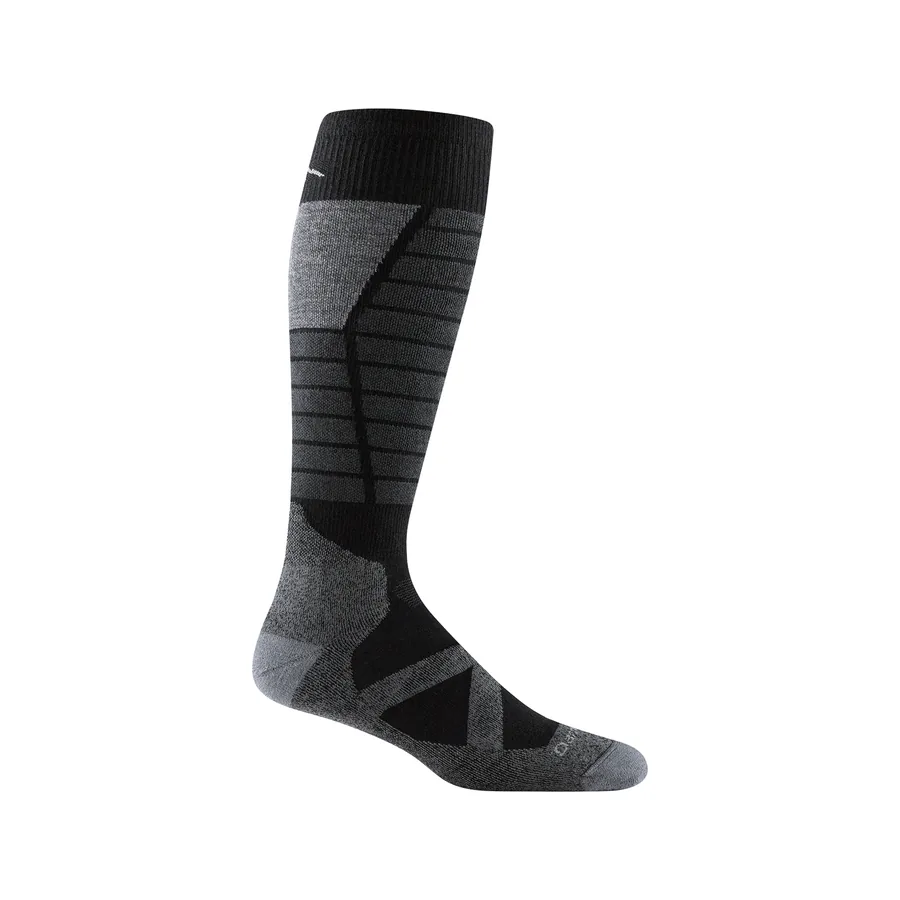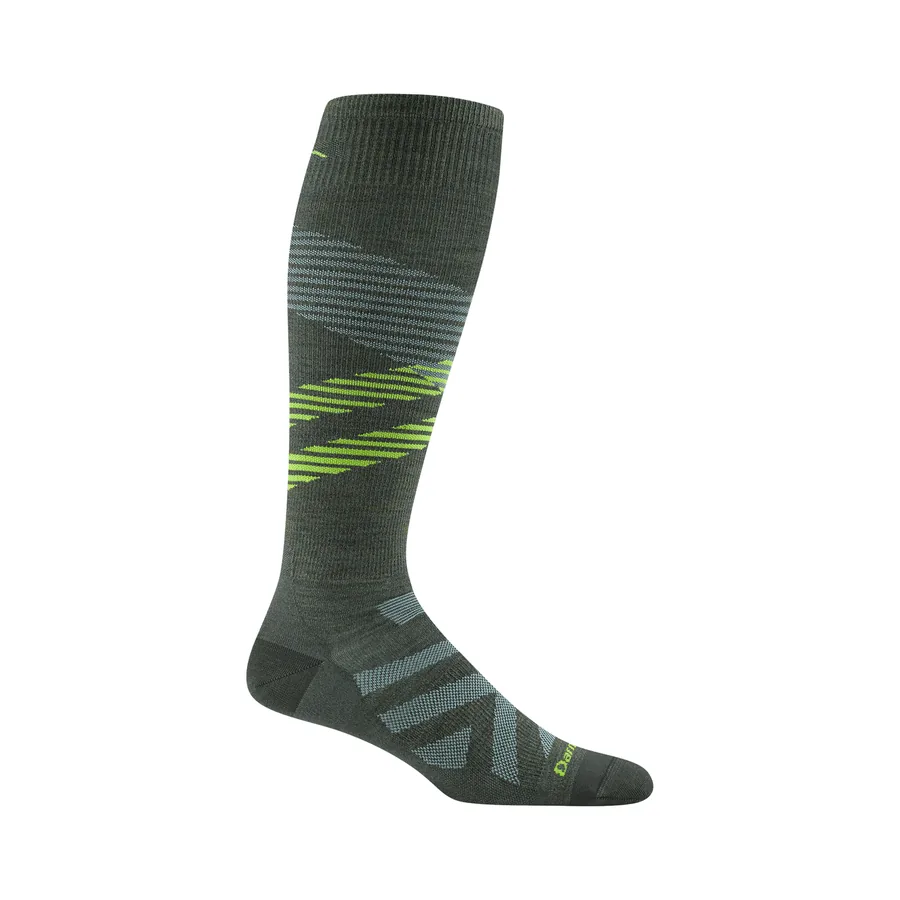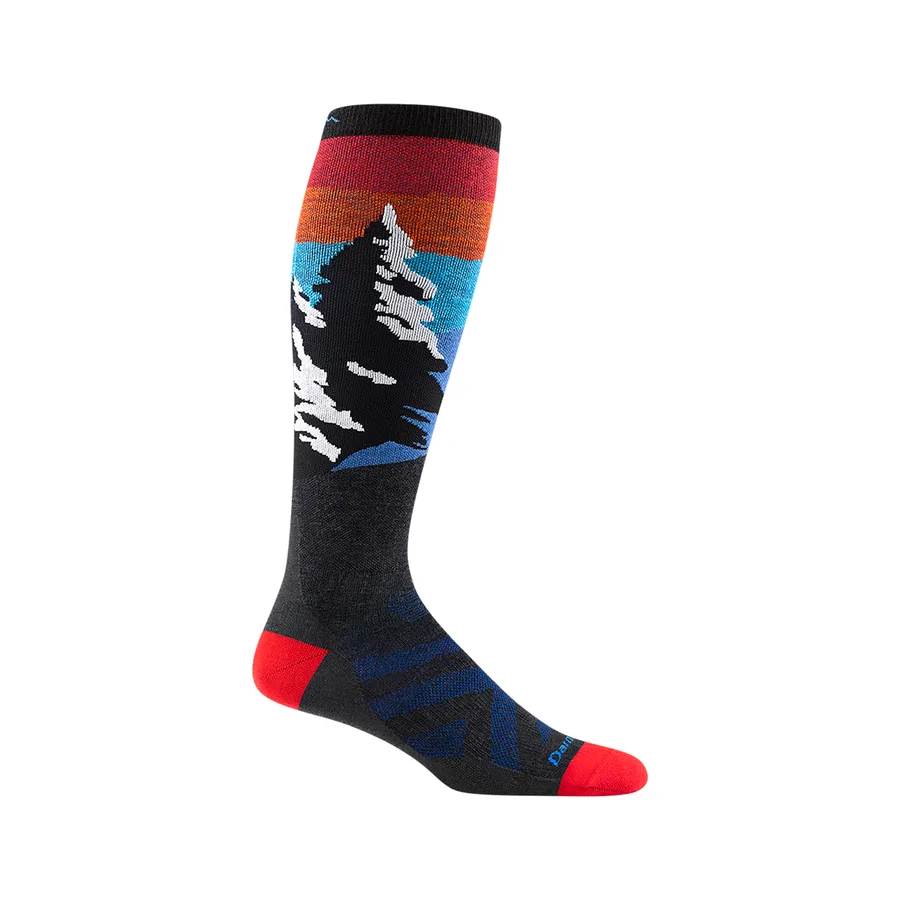

The best ski socks for women stay above the boot cuff, fit your calf without rolling, and let your toes move once the boot is closed. Start with one lower-bulk pair in a snug boot. Add cushioning only if your heel still seats and your forefoot has room at the normal closure setting.
Which are the best ski socks for women to try?
| Catalog model | Best for | What to evaluate | Trade-off |
|---|---|---|---|
| Darn Tough Vermont Yeti Over the Calf | A women’s over-the-calf starting point | Try the cuff at the same height where you normally wear your socks. | A taller cuff still needs to sit smoothly on your calf. |
| Pure Athlete Ultra Light | A lower-bulk option when the boot has little spare room | Test your toes with the boot closed normally. | If you prefer a padded feel, try a second pair after judging the boot space. |
| Hylaea Knee High Merino Wool | A unisex knee-high option | Use it to assess cuff height and calf fit against a women’s cut. | A foot-size match doesn’t guarantee the cuff sits in the right place. |
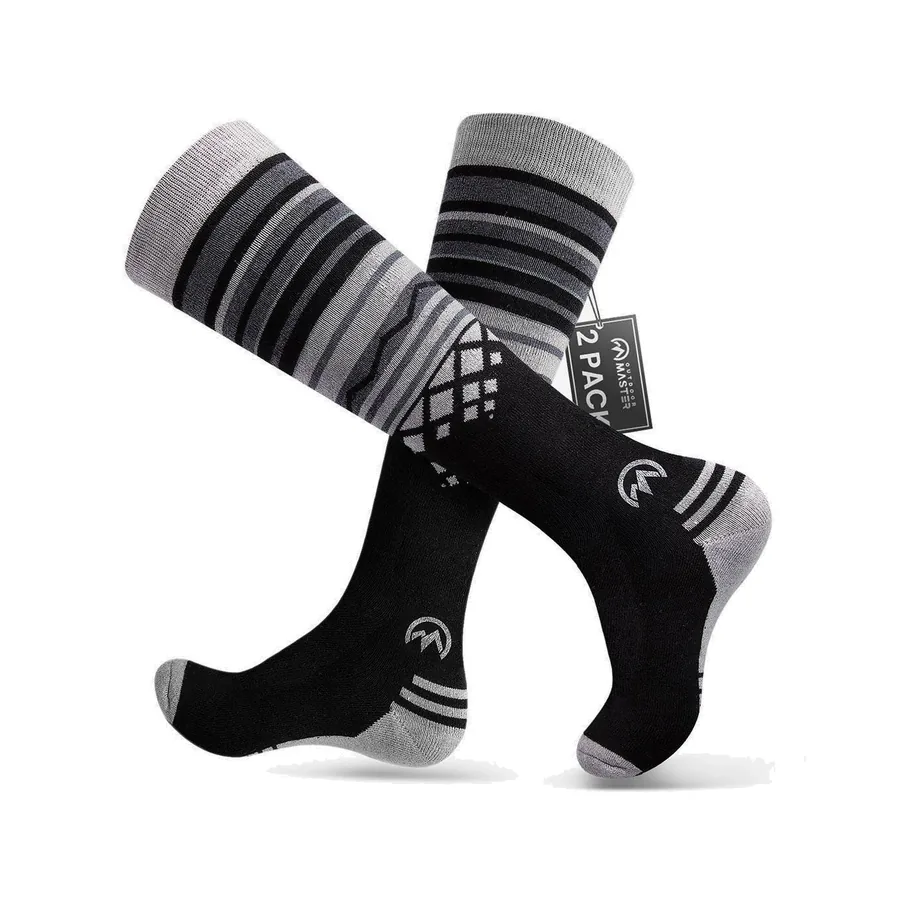
| OutdoorMaster Merino Wool Ski Socks | Another unisex option for a one-pair setup | Try it in the same boot as your reference pair. | Select on fit rather than assuming the fabric name tells you how much space it uses. |
Use the ski socks catalog to select a trial pair. Our snowboard socks guide covers the broader choice across disciplines. Here, the decision is how the calf, heel pocket, and foot fit together inside the boots you own.
How do you measure calf and cuff height?
Use the size chart’s foot measurements first. Suppose your feet measure 24.0 and 24.5 cm standing. Those values are about 9.4 and 9.6 inches using 2.54 cm per inch. Start with the larger reading so the longer foot has space. Use a separate tape reading around your calf where the cuff actually sits. A sample circumference of 36 cm converts to about 14.2 inches; that is a personal fit note, not a universal sock-size band.
Set the boot on a level floor. If the cuff edge is 33 cm above the floor and your sock reaches 36 cm when pulled into place, you have an initial height difference of 3 cm. Put the boot on and flex 4 times. If the cuff rolls down into the boot, the flat measurement overstates the usable height. Take the boot off and try a different calf fit or cuff height rather than doubling the sock over.
If a narrow cuff holds at first but leaves a tight crease after a few bends, try a different cuff construction with the same foot size. If the calf feels good but the heel pocket moves, change the foot size or overall cut instead. Treating the two areas separately makes it easier to find a pair that works without sizing up the entire foot.
Where does cushioning help, and where does it crowd the boot?
Use the same closure setting for each pair. Make an ankle bend, walk 10 steps indoors, then flex again. If your toes move in the lighter sock but stop moving in the cushioned pair, keep the lighter option. If both allow the same movement but one reduces skin friction around the shin, judge that pair over several gentle flexes before buying more than one.
A cuff or seam should lie flat against the shin. If you feel a hard ridge, take the boot off and straighten the sock once. If the pressure returns to the same place with two different socks, look at the boot fit and the alignment of your base layer. Moving to an even thicker pair can make the same ridge more noticeable. Use a boot-fitting guide to isolate closure and liner issues when the sock itself fits.
What should you pack for a full day on snow?
For 1 morning session, wear 1 fitted pair and place 1 spare in a dry pocket. For 2 sessions with a lunch break, keep the dry pair separate so it can replace the one you wore. Do not put the spare over the first pair. Try both pairs at home if they differ in thickness; a spare with very different fit may crowd a boot that felt fine at the start of the day.
After a run, note whether any discomfort sits at the toes, the heel, or the cuff. Tight toes point toward foot length or bulk. Heel fabric that collects under the arch points toward a shape or size mismatch. A cuff that folds into the liner may need a different calf fit or taller design. Make 1 change at a time through the next session. That gives you a clearer result than replacing the sock, fastening the boot differently, and moving the base layer all at once.
What if you alternate between ski and snowboard boots?
Try the same sock in each boot before buying a larger bundle. Fasten the ski boot normally and do several knee bends, then repeat with the snowboard boot. A sock that clears one cuff can land at the edge of the other, and the areas where you feel pressure can also change. Start by finding a pair that works in the boot you use most. Keep a separate pair for the other boot if the cuff or thickness has to change. Label the two pairs so you can grab the right one quickly on a mixed trip.
If you switch boots after lunch, bring dry socks even if the first pair might fit both. A damp sock gives you a different first impression of the second boot, so start the afternoon with a dry one and your normal closure position. If the second boot still feels cramped, drop the sock bulk or work on boot fit rather than trying to pull the sock higher.
For a weeklong trip, take the pair that passed your boot test as the reference. Before leaving, put on each spare with the same pants and boots. If a new pair fails at home, leave it out. A smaller pile of interchangeable dry pairs is more useful than backups you avoid once the day turns cold.