
The best mittens for snowboarding protect your fingers on cold chairs and still let you release your bindings. Choose by palm fit, thumb position, and sleeve overlap. Bring your jacket and practice one complete strap adjustment before buying. A mitten that works indoors with your gear is a better starting point than a warmth label alone.
Which are the best mittens for snowboarding to shortlist?
| Model | Best for | Useful distinction | What to look for |
|---|---|---|---|
| Tough Outdoors | Riders trying a budget mitten for cold chairs | Budget unisex option in the catalog | Test whether you can pinch and release your binding tab |
| Carhartt Waterproof Insulated Knit Cuff | Riders comparing insulated mittens with a knit cuff | Mid-tier option for cold lift rides | Notice how the cuff overlaps your actual sleeve |
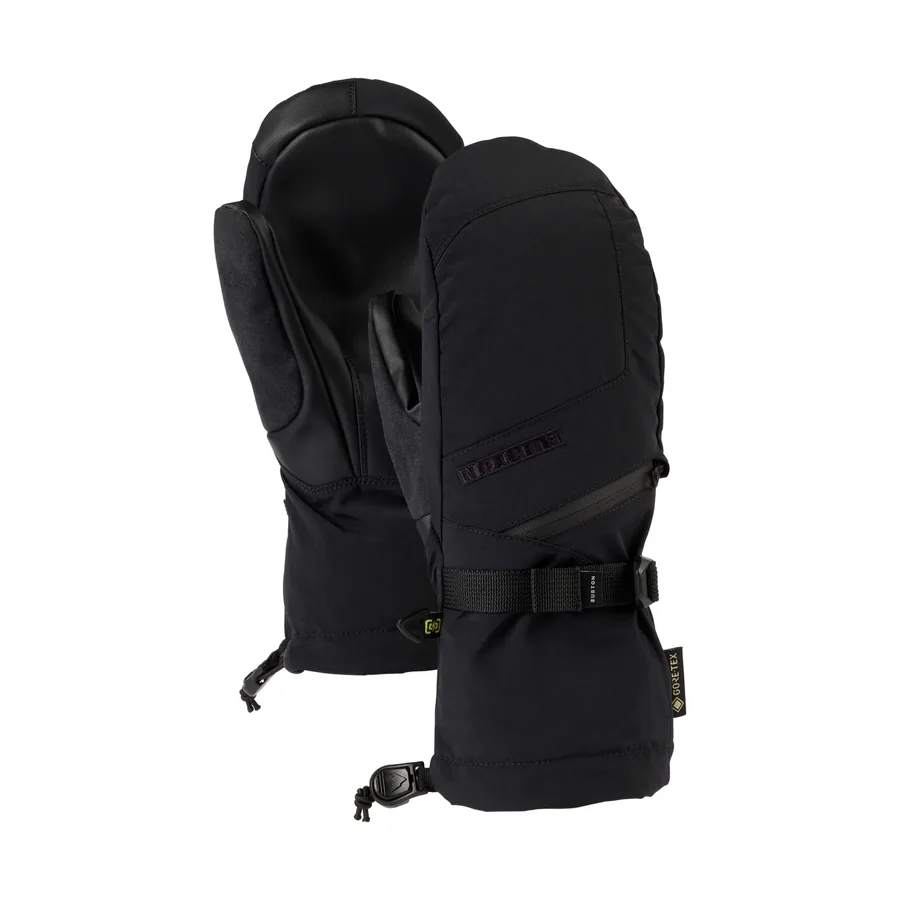
| Burton Gore-TEX | Riders trying a women’s mitten for cold stops | Women’s cut gives a useful fit side-by-side test | Assess thumb length and palm width separately |
| Burton Men’s Gore-TEX | Riders trying a men’s cut for the same use | Men’s option to try across sizes | See whether the palm rotates when gripping a strap |
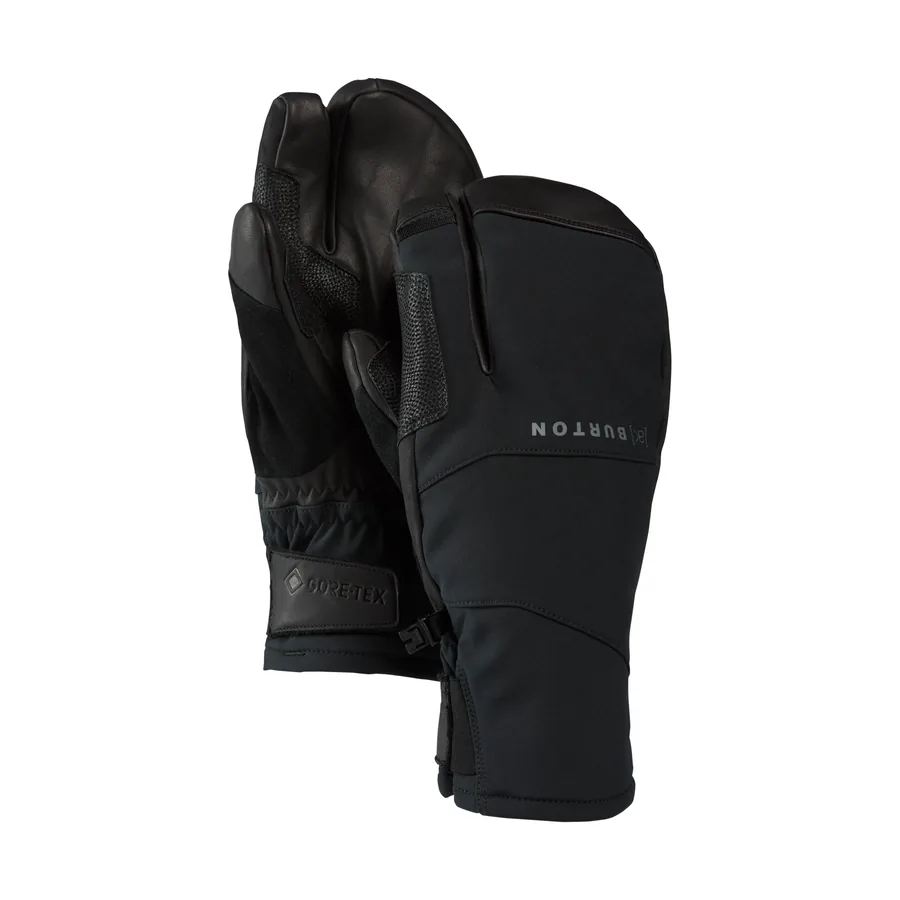
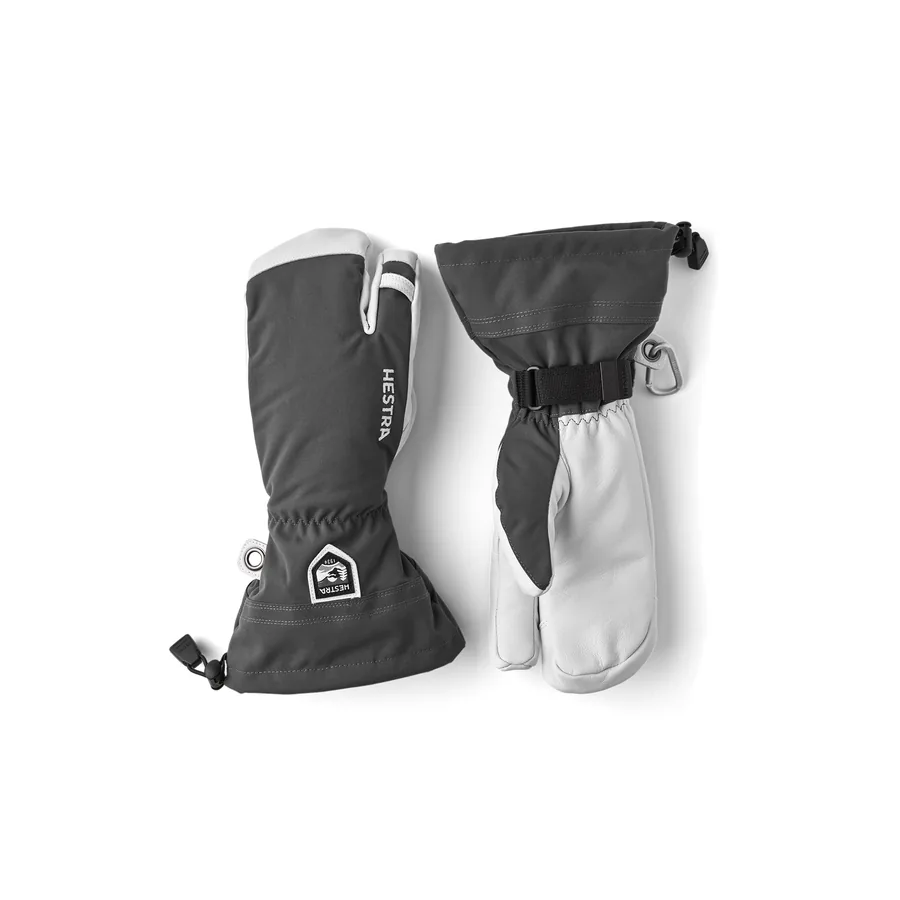
| Hestra Army Leather Heli Ski 3-Finger | Riders trying a split-finger option with a full mitten | The three-finger design offers a different approach to adjustments | Test whether the separated finger helps with your specific gear |
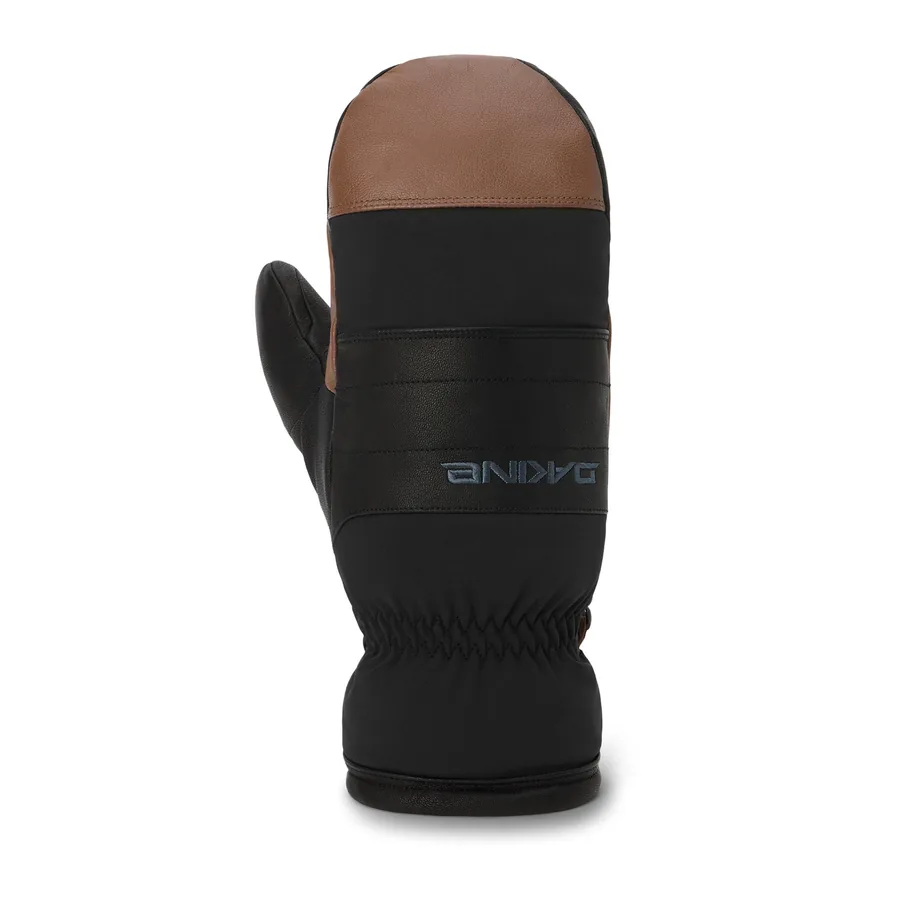
| Dakine Baron GORE-TEX Mitt | Riders who want another unisex mitten for their shortlist | A second full mitten fit to try | Test wrist closure and cuff placement with your jacket |
The snow mitten catalog is a starting point. If you are still choosing between mitten and glove formats, use the general ski glove guide first. This shortlist focuses on how a mitten works during a snowboard day, when stops often involve bending to boot level and making small adjustments with both hands.
Which movements should a mitten pass before you buy?
Put on both mittens and close the wrists as designed. Next, do four things in order: close a binding strap, release it, open a jacket pocket, and put a removed mitten back on without bare-hand help. Use the same jacket and gear you ride with. Compare whether a mitten stays positioned firmly on your palm while you pull a tab. If the mitten rotates or you cannot feel what you are gripping, try another fit before sizing down automatically.
Try the same sequence with a three-finger design if a full mitten feels clumsy. It is useful only if the extra movement helps you with your gear. Riders who almost always remove their mittens to open bindings may find a different mitten cut or a five-finger glove works better than carrying an outer layer they rarely keep on. Check both hands, because it is easy to judge dexterity based only on your dominant hand.
How do you keep snow from entering at the cuff?
Start with the intended cuff arrangement on your snow jacket. Some combinations work with the glove outside the sleeve, and some work under it. Either way, raise your hands overhead and then bend forward as if touching both boots. The two ends should stay overlapped through the movement. If the sleeve pulls away each time you reach, adjust the cuff as directed and check a second position. If neither position maintains coverage, compare a different mitten cut.
Open and close each cuff with the other hand already covered. Some ties and tabs take more work than expected with insulated mittens on. A closure that needs both bare hands makes it harder to get ready again after lunch or a quick stop. It can be worth trying a different cuff even when the first mitten feels comfortable in every other way.
Does a liner improve the setup?
Use a thin glove liner if you need hand coverage for occasional adjustments and the extra layer fits. Put one liner inside the mitten and leave the other hand without one for side-by-side test. Make a loose fist and bend your thumb across the palm. See whether the liner fabric bunches at the fingertip or folds around the base of the thumb. The liner combination should let you do the same basic movements without a tight spot.
Next, remove the mitten. If the liner comes out with it every time, try another liner cut or a roomier mitten. A liner and mitten that work together should make adjustments easier, especially if you need to expose individual fingers briefly. If your existing mitten already fits closely, adding material may solve one problem and create another. Try a warmer mitten with enough room before buying several liners for the same shell.
Which option is right for your most common cold day?
Write down what happens when your hands get cold now. Cold fingertips on an exposed chair point toward a full mitten side-by-side test. Gloves that stay warm until you remove them for every strap adjustment point toward a change in dexterity or a usable liner. Snow that gets into your sleeves points to cuff overlap. These problems look similar after several hours but require different changes.
Pack a dry spare where you can reach it with one hand covered. Try the selected mittens on a short outing before relying on them on a long trip. At the first break, repeat the strap test you used indoors and note whether the cuffs stayed in place. If a smaller change such as moving the liner or changing sleeve overlap solves the issue, keep the setup simple. If the fit still limits grip or leaves a gap during ordinary movements, use what you observed to pick a more suitable cut.
How do you choose a fit when shopping online?
If you need to order before trying on, record each hand measurement using the method in that manufacturer’s size chart. Use the size chart for the exact cut and buy from a seller with a usable return window. When the mittens arrive, leave the tags attached for an indoor test with your own gear. If one hand feels crowded, use that hand for the second side-by-side test rather than keeping a pair that only fits well on the other side.
What does one repeatable mitten test look like?
If your palm measures 21.0 cm around and your hand length is 18.5 cm, those figures work out to about 8.3 and 7.3 inches at 2.54 cm per inch. Use the chart for the specific cut. Record measurements to the nearest 0.5 cm rather than jumping a full inch on the chart: 0.5 cm equals 5 mm.
Do the same 4 jobs with each candidate: close a binding strap, release it, open a pocket, and put an outer mitten back on while the other hand remains covered. If you can do 3 of 4 in the full mitten and 4 of 4 in a split-finger mitten, choose the latter only if the extra job matters on your normal laps and thumb fit is equally comfortable.